CAPITAL TK-79 Analog Exposure Meter Camera
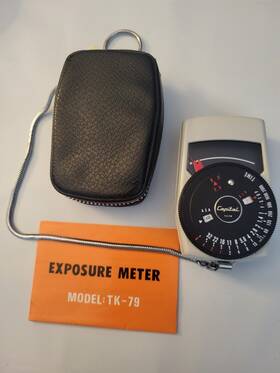
( Brand: Capital ), ( Manufacturer Part Number: TK-79 ), ( Type: Exposure Meter )
Review CAPITAL Vintage Analog Exposure Meter Camera Original Case
Introducing the TK-79 Analog Exposure Meter, a must-have accessory for any serious photographer looking to take full control over their camera settings. This high-precision instrument, manufactured by Takumar, is designed to provide accurate and reliable exposure readings for various lighting conditions.
The TK-79 features a sleek and compact design, making it easy to carry around in a camera bag or pocket. Its body is constructed from durable materials, ensuring it withstands the rigors of frequent use. The meter's large, easy-to-read dial is illuminated with a bright red needle, allowing for quick and accurate exposure readings.
The TK-79 is an analog exposure meter, meaning it does not require batteries to function. Instead, it utilizes a built-in selenium light sensor to measure the amount of light entering the scene. This sensor is highly sensitive and can accurately measure light levels in a wide range of situations, from bright sunlight to dimly lit interiors.
The meter has a built-in incident light meter, which measures the light that falls on the subject, as well as a reflective light meter, which measures the light that is reflected off the subject. This dual-meter design allows for maximum flexibility in various shooting scenarios.
The TK-79 also includes a variety of features to make shooting easier and more efficient. It has a built-in bulb mode, which is ideal for long exposures, as well as an aperture priority mode, which allows you to set the aperture and let the meter determine the correct shutter speed.
Additionally, the TK-79 includes a built-in scale for calculating depth of field, making it an indispensable tool for landscape and portrait photographers. The meter also has a built-in flash mode, which allows you to measure the intensity of external flash units.
Overall, the TK-79 Analog Exposure Meter is an essential tool for any photographer looking to take their photography to the next level. With its high-precision sensors, versatile features, and sleek design, it is the perfect companion for any camera setup.
A Detailed Analysis of Buying a TK-79 Analog Exposure Meter for Your Camera
Introduction:The TK-79 Analog Exposure Meter is a popular choice among photographers who prefer manual control over their camera settings. In this analysis, we will discuss the pros and cons of investing in a TK-79 Analog Exposure Meter for your photography needs.
Pros:1. Precision and Accuracy: An analog exposure meter offers a more precise and accurate reading of light levels compared to digital meters. This can lead to better exposure and higher-quality images.
2. Tactile Feedback: The analog design provides a tactile feedback that digital meters lack. The use of a needle and scales allows for a more intuitive understanding of the light levels, making it easier to gauge the correct exposure.
3. Durability: Analog exposure meters are known for their durability and robustness. They do not require batteries and are less susceptible to damage from electromagnetic interference.
4. Versatility: The TK-79 Analog Exposure Meter is suitable for various shooting conditions, including bright sunlight and low-light situations. It can also be used with different types of cameras, including film and digital.
5. Retro Aesthetic: For photographers who prefer a more traditional approach, the TK-79 Analog Exposure Meter offers a retro aesthetic that can add to the overall experience of shooting with manual settings.
Cons:1. Learning Curve: Using an analog exposure meter requires a learning curve, as photographers need to understand how to read the needle and scales accurately. This can be a disadvantage for those who are used to digital meters or prefer a more straightforward approach.
2. Limited Features: Analog exposure meters do not offer the same level of features as digital meters. They do not have the ability to measure flash exposure or provide histograms, among other things.
3. Limited Availability: The TK-79 Analog Exposure Meter is not as widely available as digital meters. This can make it more difficult to find and purchase, especially for those who live in areas with limited photography supply stores.
4. Cost: Analog exposure meters can be more expensive than digital meters, especially vintage models in good condition. This can be a disadvantage for photographers on a budget.
Conclusion:The TK-79 Analog Exposure Meter offers several advantages for photographers who prefer manual control and a more tactile shooting experience. Its precision, durability, versatility, and retro aesthetic make it a popular choice among photography enthusiasts. However, its learning curve, limited features, and availability, along with its cost, may be disadvantages for some. Ultimately, the decision to invest in a TK-79 Analog Exposure Meter depends on an individual's photography needs, preferences, and budget.
Recommendation:If you are a photographer who values precision, durability, and a more tactile shooting experience, and you are willing to invest the time to learn how to use an analog exposure meter, then the TK-79 Analog Exposure Meter is an excellent choice. However, if you prefer a more straightforward and cost-effective solution, or if you require more advanced features, then a digital exposure meter may be a better option for you.
Details:
This includes the original case and user manual. Made by the reputable brand Capital, this light meter is specifically tailored to fit cameras, providing accurate exposure readings essential for capturing perfect shot. The Vintage Capital TK-79 Analog Exposure Meter is a classic piece of equipment designed for photographers.
part #: tk79 prices
- $20.00-$75.00
specifications vimopho:
- brand: Capital
- mpn: Tk-79
- type: Exposure Meter
shipping vimopho:
- cost: $5.52
- transit: 4-9 Days
- class: Standard
- service: USPS Ground Advantage
- carrier: USPS
- type: Calculated
seller vimopho:
- city: Fountain Hills, Arizona
- # reviews: 387
- rating: 100.0%
payments vimopho:
- wallet: Apple-pay
- other
- credit card: Mastercard
general vimopho:
- Cameras Photo > Vintage Movie Photography > Vintage Parts Accessories
returns vimopho:
- policy: No Returns
offer vimopho:
- quantity: 1
- sold: 0
- availability: In Stock
- options: Ship-to-home
- started: March 19, 2026
- best offers: True